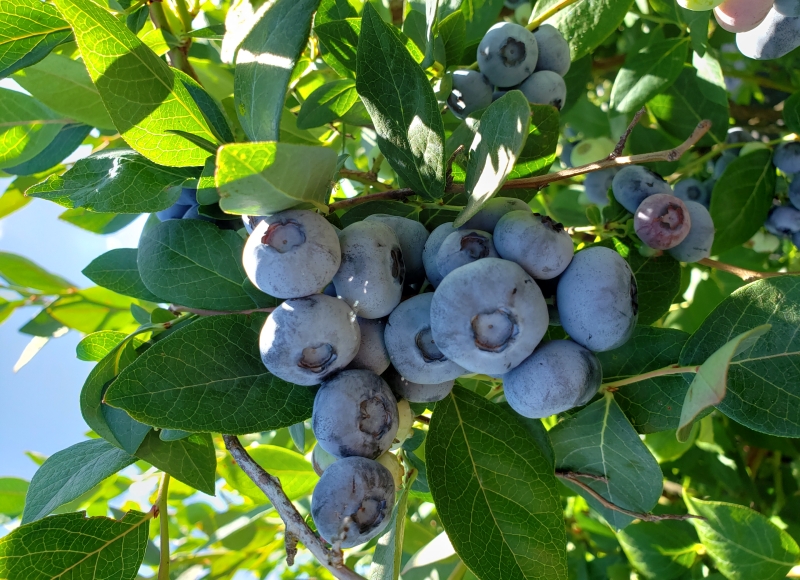
Blueberry fruits from five
commercial cultivars and 13 breeding selections grown at the same locations
over two growing seasons were analysed for total phenolics (TPH), total
anthocyanins (ACY), total hydroxycinnamic acids (HCA), total flavonols (FLA), fruit
weight and oxygen radical-absorbing capacity (ORAC). Variation in ORAC, TPH,
ACY, HCA, FLA
and fruit weight among genotypes was much greater than that observed between
growing seasons, indicating that genetics plays a more important role than
growing season in influencing ORAC and phenolic content in blueberries.
Significant main effects for growing season and genotype ¥ growing season
observed for ORAC, ACY, HCA and fruit weight demonstrate that environmental
growing conditions can impact levels of phenolics and ORAC in blueberries and
that certain genotypes vary in their capacity to synthesise phenolics under
different growing conditions. In general, genotypes with smaller berries had
higher ORAC values and levels of TPH, ACY, HCA and FLA than large-berried genotypes. Over both
growing seasons, ORAC correlated highly with TPH, ACY, HCA and FLA, while fruit weight
correlated inversely with all phenolics measured. Our results indicate that
blueberry genotypes should be screened over multiple growing seasons in order
to identify antioxidant- and phenolic-rich germplasm. Copyright © 2003 Society
of Chemical Industry